
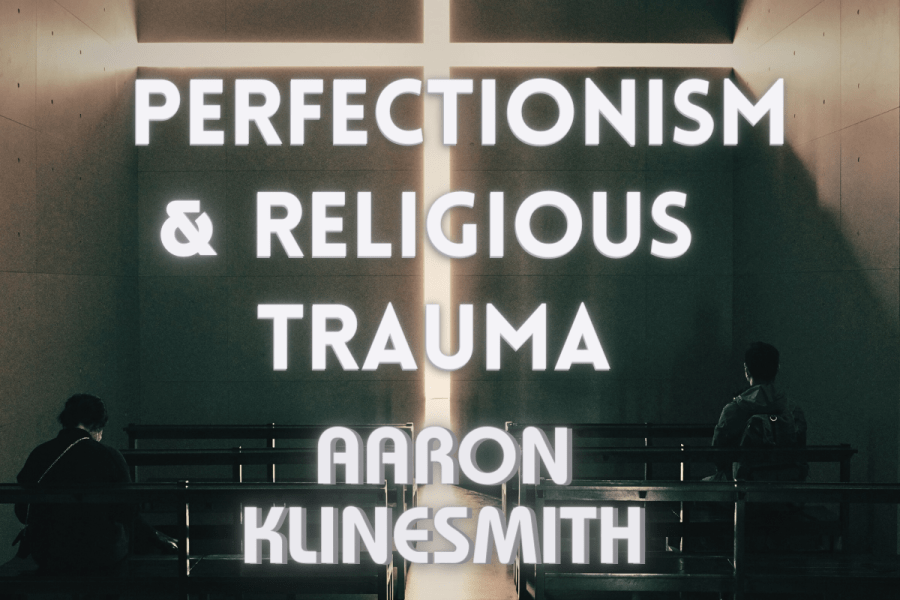
Photo by Chris Zhang on Unsplash
by Aaron Klinesmith
I have somewhat of a subconscious mantra that my mind likes to repeat to me every time I make a mistake: I’m not allowed to make mistakes; I have to be perfect. For years I could not figure out where this was coming from – until recently. The problem for me, and many others, came from the teaching of extremist religious beliefs.
I have no memory of the first time I was told that sinners burn in hell for all eternity. I would have been too young. When you put it like that, it sounds awfully scary, but “burning in hell” really is seen by many as completely normal. It’s teachings like these that can have a long-lasting negative impact on a person, and I had no idea that there was any way of life outside of what I grew up with; church culture was inseparable from my own identity.
Churches often teach that a person cannot trust their own judgment, only the judgment of God…and maybe their pastor, too. In addition, some churches teach that humans are meant to be thought of as inherently dirty and sinful. If someone takes these teachings to heart, it is almost impossible to see themself as good in any way. When they do manage to find pride in their own accomplishments, they are left wondering if they deserve to.
Another common teaching in churches is the idea that sin should be avoided at all costs. Sinners will be forgiven, but only if they are truthful in their convictions. To make matters worse, sin is often an amorphous concept. Every church and every person will have a different opinion on what is considered sinning and what the ramifications of sin are. This can make it difficult to have a concrete sense of value as a person. For young children who are still discovering their sense of self, this can be especially confusing. That is not to say that all religious groups are bad, just that there are some that take things too far.
As I have continued to grow and learn more about my mental health, I have been increasingly curious about the potential origins of my own perfectionism. Many people, including myself, who have been exposed to strict religious doctrines are taught that nothing good can come from humanity. This can make it difficult to have confidence in anything that you do.
Perfectionism, like many mental health related terms, is often overused and misrepresented. According to a study by Stoeber et al. (2020), the current model for perfectionism has both an adaptive and maladaptive side, meaning that it can have either a positive effect, a negative effect, or possibly a bit of both. Perfectionism itself can be described as a personality trait that causes someone to set high expectations for themselves. Though these high expectations can lead to personal growth, they can also cause great emotional distress. In the case that a perfectionist is unable to reach the standards they set for themselves, they may struggle to be satisfied with their work or the effort they put into it.
In her book, Leaving the Fold: A Guide for Former Fundamentalists and Others Leaving Their Religion, Marlene Winell (2007) has this to say about perfectionism: “Your thoughts are inadequate, your feelings are irrelevant or misleading, and your basic drives are selfish and destructive” (p. 74). Between someone’s never-ending quest for perfection and the sense of doubt about their own value as a person, it is easy to see why a toxic religious environment would encourage perfectionism. This perfectionism as well as many other factors are often seen in patients living with Religious Trauma Syndrome. According to an article posted on Sabino Recovery’s website:
Religious Trauma Syndrome (RTS) is a term coined by Marlene Winell, a psychologist and former fundamentalist Christian, to describe a condition that affects people who have experienced trauma as a result of their religious beliefs or practices. RTS is not a recognized medical or psychiatric diagnosis, but it is a useful term to describe the effects of religious abuse, indoctrination, and toxic religious environments.
Even leaving the toxic environment itself tends to cause harm, and for many, religious trauma really only starts once they have one foot out the door. Winell puts it best when she says, “In general, leaving a cherished faith is much like the end of a marriage.” When a person is raised in a strict religious environment, they often have very little experience outside of that environment. Even if they are exposed to these doctrines later in life, the teachings can still have a similar impact; regardless of how much time and commitment anyone gives to a harmful religion, the doctrines can still leave a lasting impression.
Though it takes time, it is possible to heal from religious trauma and perfectionistic urges. While discussing the stages of recovery, Winell says, “You too can find new principles to live by and new meaning for your life.” Given the right help and motivation, I believe we can achieve whatever dreams we are striving for. Personally, though my journey is not complete, I have made a lot of progress over the last few years. I believe that in all areas of life, knowledge is the foundation. It is important to understand the problem before we try to solve it. Only then can we move forward in our lives.
References
Sabino Recovery. (2023, October 7). What is religious trauma syndrome? https://www.sabinorecovery.com/what-is-religious-trauma-syndrome/
Stoeber, J., Madigan, D. J., & Gonidis, L. (2020, July 15). Perfectionism is adaptive and maladaptive, but what’s the combined effect? Personality and Individual Differences, 161, Article 109846. https://doi.org/10.1016/j.paid.2020.109846
Winell, M. (2006). Leaving the fold: A guide for former fundamentalists and others leaving their religion. Apocryphile Press.
 Stark Voices