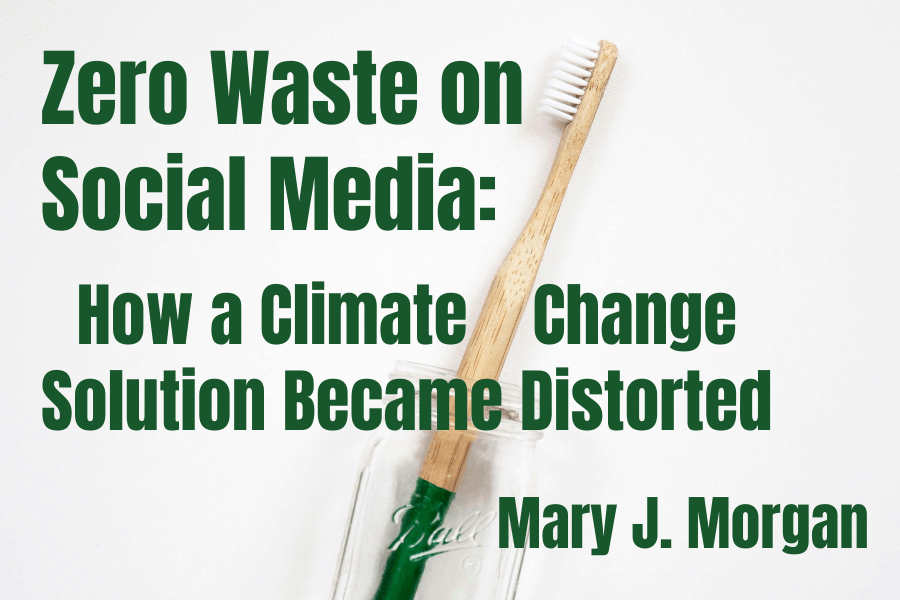
Photo by @lauramitulla on Unsplash
by Mary J. Morgan
Waste is ubiquitous in modern living. The goods we consume are plagued with unnecessary packaging and designed to have a short lifespan. Within consumer culture, people often throw items away without a second thought. This has detrimental effects on our planet, as landfills are becoming more difficult to maintain and pollution continues to poison our ecosystems and communities. Waste has become so normalized that most people have forgotten how to live without producing an abundance of trash. Some individuals, however, have decided to take matters into their own hands and combat this issue by choosing to go “zero waste.”
Zero waste is a social movement with the goal of producing the smallest amount of trash possible and decreasing carbon emissions. “Zero waste” was originally only known as a term regarding production processes in manufacturing, but Bea Johnson decided to apply the term to her home in the 2000s. She created a blog documenting her journey of reducing her family’s waste and even went on to publish a book on zero-waste homes. Bea is credited as the founder of the zero-waste movement, which has been recognized by environmental scientists and activists as a feasible solution to climate issues. With the internet allowing ideas to spread more easily, the movement gained traction on mainstream social media platforms like Instagram, where individuals have been documenting their journeys to sustainable living since the 2010s. While the popularity of zero-waste living on social media is extremely beneficial as it has raised awareness of the movement, it has unintentionally harmed the movement through unrealistic depictions.
A zero-waste lifestyle consists of only purchasing necessary items and refraining from the usage of disposables. Reusing items, purchasing items with little or no packaging, shopping for items secondhand, and pursuing local handmade goods are all encouraged instead. According to The Zero Waste International Alliance, zero waste is “the conservation of all resources by means of responsible production, consumption, reuse, and recovery of products, packaging, and materials without burning and with no discharges to land, water, or air that threaten the environment or human health.” When purchasing products, followers of the movement are encouraged to seek sustainable materials such as bamboo, stainless steel, glass, and organic cotton. This allows for many zero-waste products to have a cohesive and sleek design, which aestheticizes the movement. This effect is intensified by “lifestyle influencers” on social media carefully curating their posts to create a visually appealing feed. It is also common for the zero-waste hashtag on Instagram to feature images of “modern” pantries with matching glass jars filled with bulk-purchased dry goods or homesteaded canned goods. Referring to zero waste on social media, Wicker states, “You’ll see perfect kitchens with white subway tiles and bamboo countertops, lined with rows of more mason jars filled with legumes.” This aestheticization on social media can undeniably be cited as one reason for the movement increasing in popularity. Wicker states, “It’s essentially another layer to ‘having it all’: a career, a family, a perfectly Instagrammable life, and now you’re saving the planet, too.” While on the surface this portrayal may seem innocent and even beneficial to the movement, it is often unrealistic and can do more harm than good by discouraging individuals from going zero waste.
The glamorization of zero waste on social media can potentially be harmful as it intimidates individuals and makes them feel that they cannot afford to pursue the lifestyle. The zero-waste hashtag on social media is dominated by images of modern homes with fancy kitchens. Expensive zero-waste specialty products, such as stainless steel lunchboxes and reusable silicone zip bags, are put on display by influencers and are highly coveted within the movement. Murti states, “The public face of zero waste looks more and more like domestic perfection, thus turning away people who’d actually benefit from it most—busy or resource-constrained families.” This portrays a highly commercialized facet of the zero-waste movement, one that is only attainable through wealth and privilege. This public image causes individuals to feel that they must have the financial stability to purchase expensive zero-waste products and the privilege of having the time to cook and create home products from scratch.
In reality, people do not need fancy new items to become zero waste and can use what they already have. In fact, purchasing brand-new zero-waste products and throwing away original products when they are still usable is contradictory to the true intent of the movement, as Murti states: “It implicitly suggests that throwing out your old things and investing in the new is the right way to go — which is the antithesis of the circular economy.” Individuals can embrace frugal zero-waste habits, such as reusing old pasta sauce jars and propagating produce trimmings, and even make a larger environmental impact in doing so. Some influencers, such as Shelby Orme, attempt to spread awareness of this non-aestheticized side of zero waste, nicknamed the “ugly” or “realistic” side. This side of the movement is valued among individuals who truly care about positively impacting the planet; however, it is not as popular on social media as the glamorized version.
The portrayal of zero-waste living on social media can also potentially mischaracterize and harm the movement as it most commonly depicts homes that are already entirely zero waste. Depictions commonly reflect homes that appear to be entirely committed to the movement and appear to have already completed their transformation. This largely ignores homes that are only partially committed to the movement or are in the middle of converting, causing individuals to see only one portrayal of sustainable living. Referring to the process of converting a home to zero waste, Murti states that “the Instagram zero-waste influencer will not showcase this process, because the sea of how-to’s and gorgeously arranged fruits don’t exist to educate the zero-waste curious, but to create #inspo and rack up followers.” Zero waste is then seen as an all-or-nothing venture, and individuals are left with the impression that they must be entirely committed if they want to become zero waste, and that they have failed if they cannot make all of the habit changes. Converting to this lifestyle is seen as an intimidating task and individuals are unlikely to make changes in their living habits. Murti states that “The problem with showcasing the best possible way zero-waste living could look, minus any context about the struggle it took to get there, is that it creates a pinnacle with no stairway to reach it.” This unrealistic depiction, however, can be attributed to the issue of social media being unrealistic overall, with Murphy stating, “Most Instagram users carefully curate their posts in order to present their lives in a more favorable light, often omitting aspects that would not be taken as positively.” In reality, it is far more sustainable for the majority of homes to be only partially zero waste, rather than for a few homes to be entirely zero waste.
Furthermore, the execution of zero waste on social media can potentially turn women away from the movement, as they worry that they will be the only ones managing the waste production of their households. The majority of zero-waste influencers on social media are female, as Wicker states: “The world of zero waste is fronted by female influencers who DIY their beauty products, keep immaculate white-walled households, and grocery shop with pretty white net bags.” As a result, zero-waste habit changes are centered around grocery shopping, cooking, and cleaning. These domestic habits are largely executed by women, as “Men do on average 50 percent less unpaid household work than women.” In Wicker’s article discussing the gender politics of zero waste, she quotes movement founder Bea Johnson: “‘I was the one doing the grocery shopping and cleaning the house. It was up to me to bring zero waste in the household.’” In real life, zero waste is centered around controlling the waste that an individual personally creates, which mainly comes from the household. Women who already feel burdened by executing the majority of domestic responsibilities may look at zero waste and feel intimidated by the increase in labor. In addition to performing other forms of household chores that go underappreciated, women may fear that they will be the only ones making any effort toward zero waste and essentially be stuck doing it all.
Even though the glamorization of zero waste on social media is harmful, it can be viewed as beneficial as it raises awareness of sustainable living. The internet and social media have helped ideas spread more easily than ever. The zero-waste movement is no exception to this, as awareness of zero-waste living has increased dramatically in recent years and has entered the mainstream largely due to social media. Still, Buczyńska-Pizoń states that a barrier preventing individuals from going zero waste “lies in the general lack of knowledge of this concept, which is why the use of influencers for its promotion can be a positive step.” This explains why environmental activists may view even the unrealistic depictions of zero waste on social media as positive, as any representation helps spread awareness. Buczyńska-Pizoń states, “Social media influencers have a chance to contribute to spreading eco-friendly practices.” These influencers are helping to normalize sustainable living by showcasing their zero-waste habit changes on social media for others to see, and inspiring others to make similar changes in their own lives. Furthermore, the aestheticized version of zero waste may help attract individuals who otherwise may not be interested, due to long-standing negative stereotypes portraying Earth-conscious living as unglamorous.
Although turning this image around has been helpful, the portrayal has shifted to the other extreme. Influencers possess the power to control what others view on social media, and if they aim to depict zero-waste living in a more realistic light, they can make major strides in overhauling the movement to appear more accessible to others. Making small habit changes can help mitigate a lot of the issues individuals may face when pursuing a zero-waste lifestyle. Those in a position to educate others about the movement can encourage others to make small changes. Maggie Spangler, the owner of My Eco Shop in Akron, Ohio, states, “I think you give yourself time, use what you have, and find those switches. And I think people would be amazed on how they would be able to do it after a couple years” (personal communication, March 3, 2024). This mindset can motivate and encourage individuals embarking on transitioning to zero waste, as they feel less intimidated or judged in attempting the changes.
Individuals will look at unrealistic depictions on social media and feel that they do not have the resources, time, or energy to incorporate sustainable habit changes into their lives and become discouraged. True zero-waste living contradicts what is depicted on social media, which involves frugal habits such as using what one already owns until it is no longer usable and making small habit changes that amount to large changes over time. Due to these issues, Earth-conscious individuals may criticize the way zero waste is represented on social media, but it undoubtedly has made major strides in normalizing sustainable living and presenting it in a positive light, rather than a negatively stereotyped “unclean” or depravation-based lifestyle.
Promoting “low waste,” a less strict form of zero waste, can help mitigate a lot of the accessibility issues in zero waste. A low-waste lifestyle consists of partially altering personal habits without being fully committed to changing the entire household. Low-waste living can actually be more sustainable as individuals are able to execute the habits longer without feeling burnt out and prone to giving up. Low-waste living can help individuals foster a healthier mindset toward sustainable living, without fear of not being good enough or having enough resources. For the future of our planet, we all need to focus on what sustainable changes we can make, without getting caught up in the appearance of our possessions or an image of perfection.
References
Buczyńska-Pizoń, N. (2020). The promotion of the zero-waste concept by influencers in social media. Public Governance, 52(2), 63-74. https://doi.org/10.15678/ZP.2020.52.2.06
Murphy, M. (2019). Zero waste on Instagram through the lens of precautionary consumption. Gettysburg Social Sciences Review, 3(1), Article 3. https://cupola.gettysburg.edu/gssr/vol3/iss1/3
Murti, A. (2019). Instagram has diluted zero‑waste living to an aesthetic. The Swaddle. https://www.theswaddle.com/instagram-has-diluted-zero-waste-living-to-an-aesthetic
Pratiwi, P. Y., Handra, T., & Choirisa, S. F. (2021). Determinants of zero waste lifestyle adoption among generation-Z. Conference Series, 3(2), 371–384. https://doi.org/10.34306/conferenceseries.v3i2.604
Wicker, A. (2019). The complicated gender politics of going zero waste. Vox. https://www.vox.com/the-goods/2019/5/9/18535943/zero-waste-movement-gender-sustainability-women-instagram
Zero Waste. (2020). Who started the zero waste movement?https://www.zerowaste.com/blog/what-is-it-who-started-the-zero-waste-movement/

Mary Morgan is an Education major at Stark State. She is a part-time student and works part-time as a preschool teacher. She is very passionate about the environment and started her zero waste journey in 2020. Mary wrote this essay to explore the nuances of zero waste and increase awareness of the true meaning of the movement.
 Stark Voices