





A publication of Stark State College student work highlighting diverse perspectives, critical insights, and thoughtful reflection.
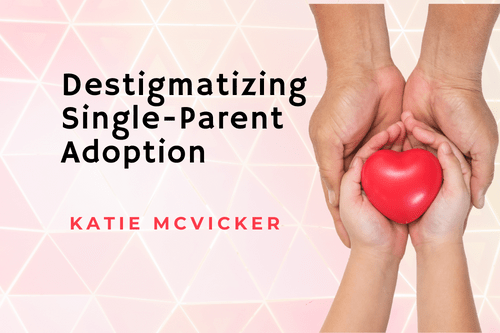
Headlines about single-parent adoption are far and few between, except in the cases of celebrities, such as Angelina Jolie, who is raising three of her biological children along with three adopted children in her multi-million dollar home. Do single individuals need to be millionaires to be loving, supportive, and resourceful adoptive parents? Single-parent adoption has become a major issue in recent years, corresponding to an increase in single-parent homes. In fact, an article from Adoption Advocate reports that “From 1980 to 2008, the number of single-parent households grew from about 6,000,000 to a little over 10,000,000, accounting for over 25% of households with children.” The same article points out that single adopting parents increased from between .5 – 4% to “28% of all parents adopting from U.S. foster care in 2017-2019.” While single-parent adoption has become more prevalent and accepted, there are still stigmas single parents face when applying for adoption. Traditionally, individuals still perceive adoption as ideally involving a two-parent household. However, the pathway for adoption should be as accessible for single men and women as it is for couples.
Single men and women face more challenges adopting children. In fact, there is also little research representing single parents who choose adoption by choice. In a 2020 study described by Gasse and Mortelmans, a single parent by choice is characterized as a parent who chose to be single before becoming a parent through artificial insemination, informal fertilization (choosing a partner randomly or deliberately but without pursuing a relationship), unplanned pregnancies or adoption. The researchers interviewed single mothers to find out how the mothers adjusted their lives to raise a child on their own. Researchers explained adoption procedures are harder for single parents than couples, and only one single parent could be found to interview in the “adoption” category. The article discusses why it is harder for single people to adopt by explaining different types of “gatekeeping” barriers. Gatekeepers, in this article, are explained as people who can be helpful but can also be a barrier for a single person trying to adopt. Gatekeeping in the context of adoption is described as “more formal and evaluative,” meaning that single people who are trying to adopt are subject to a rigorous screening process. Gasse and Mortelmans emphasize that the difference between a single person trying to adopt versus a couple is the stigma attached to the screening process for single people.
The stigma attached to single-parent adoption is different compared to the stigma related to adoption in general. Factors such as gender and subsequent related perceptions can complicate the adoption process. In a literature review explaining the challenges that single men face while trying to adopt children, Seeman compares different studies that have been done on single fathers who chose adoption, as well as examines complex attitudes that affect both single adoptive fathers and mothers. Despite some conflicting viewpoints, it was discovered that single men face certain types of stigma while trying to adopt. If the single man has a history of mental health issues, social workers in adoption agencies are more likely to disregard the adoption application.
According to Seeman’s description of research, most single adoptive parents are female. Contrary to the researchers’ expectations, however, single mothers face greater stigma in their communities and “were described by participants in this study as ‘less intelligent, less desirable, less secure, less fortunate, less satisfied with life, less moral, less reputable, less of a good parent and less economically advantaged’” than single fathers. While the sample group in this study isn’t specified in the literature review, it reveals the pervasive attitudes some people have toward single mothers. The literature review suggests that mental health professionals require the proper training so that eligible candidates who are trying to adopt should not be discriminated against based on gender, marital status, sexual orientation, or any history of a mental health disorder.
Family support is another key element for a single parent looking to adopt a child. A study described by Biasutti and Nascimento was conducted on multiple families with single parents with adoptive children. The families were interviewed to investigate how the adoption process worked for them, what they anticipated and what they experienced throughout the process. From this study, it was found that all families had a strong desire to parent children and, therefore, were able to overcome any challenges and changes that took place during the process. Extended family support played an immense role in the success of single-parent adoption. The study explained that some family members were hesitant with regard to their loved one adopting as a single parent and questioned whether it was the right decision. Some of the participants expressed their concern that the child would be lacking the role of the opposite sex. However, all the participants in the study accepted the child and, at one point or another, were part of the caretaking and support system. In this study, the researchers determined it would be important for the child to have involvement from grandparents, aunts, and uncles. Biasutti and Nascimento’s study, which agrees with Lindner, shows that single parents are just as capable of a successful adoption, with an emphasis on the fact that single parents should have a broader support network.
Social worker and blogger Amanda Booreman writes about the challenges she faced adopting as a single mother, as well as the support system she had from her family and Child and Adolescent Mental Health Services. After preparing for a year prior to the adoption of her five-year-old daughter, she discovered that adoption was not for the faint of heart once her child had been placed with her. Throughout the years, she and her daughter faced many challenges learning how to become a family unit and getting her daughter the proper care and support to work through emotional trauma and anxieties. At the time, finding the right support system was difficult. Amanda suffered financially and struggled to find her daughter the proper mental health care that would pinpoint the areas in her development that needed treatment. One strategy she used was reaching out to government agencies and the birth family for guidance. After years of conquering challenges, Amanda and her daughter now have a wonderful relationship with each other, and both advocate for systematic change in adoption.
A fact sheet from Child Welfare Information Gateway, sheds some light on how to create these changes. This fact sheet lists resources and helps families navigate the adoption process. Among these, easily accessible support groups or free counseling (pre- or post-adoption) could benefit both single-parent and child. These resources would allow for a smoother transition and would also serve as a point of contact when experiencing times of unforeseen hardships. Also, prospective adoptive parents could be educated on their rights and responsibilities and provided with unbiased information on local adoption agencies, which could potentially improve the support and encouragement they feel throughout the adoption process. Lastly, quality and continual training should be allotted to social workers.
Recent developments in the United States could potentially raise the need for single-parent adoption now more than ever. In an article from the “Perspective” section of The New England Journal of Medicine, the author Lazzarini discusses the overturn of Roe v. Wade on June 24, 2022. The overturn limits available access to women seeking abortion through medicine and prevents third parties from obliging services to a woman seeking an abortion. Abortion rights are still being decided at the state level, and some state legislatures have already passed laws completely banning abortion. Given the overturn of Roe v. Wade, it would be fair to speculate that the change in available access to abortions could then correlate with an increase in live births and further need for adoptions. More children needing adoption means a rise in the need for available adoptive parents so that these children don’t end up in the foster care system.
Destigmatizing single-parent adoption would present an opportunity for a larger pool of adoptees to find a permanent home. Given the research stated above, it remains difficult to allow single parents to finalize the adoption. However, the United States continues to have an overflowing foster-care system with underpaid and overworked social workers attempting to govern this system. Stigmas should be reduced to lessen the burden on this system and allow single-parent adoptions to become more prevalent when it is appropriate. Of course, there should be an objective structured process to ensure a safe, nourishing environment for the child, but it should not correlate with individuals’ subjective opinions.
References
Biasutti, C.M. & Nascimento, C.R.R. (2021). The adoption process in single-parent families. Journal of Human Growth and Development, 31(1), 47-57. 10.36311/jhgd.v31.10364
Booreman, A. (2015, October 21). Nothing prepared me for adopting a child as a single parent. The Guardian. https://www.theguardian.com/social-care-network/social-life-blog/2015/oct/21/adopting-a-child-as-a-single-parent-nothing-prepared-me
Carter, J.R, Chang, C.Y, Parrish, M.S, Whisenhunt, J.L. (2019) Addressing single parents’ needs in professional counseling: A qualitative examination of single parenthood. The Family Journal: Counseling and Therapy for Couples and Families, 27(2), 188-198. 10.1177/1066480719835343
Child Welfare Information Gateway. (2019). Adopting as a single parent. https://www.childwelfare.gov/pubs/single-parent/
Gasse, D.V. & Mortelmans, D. (2020). With or without you-starting single parent families: A qualitative study on how single parents by choice reorganize their lives to facilitate single parenthood from a life course perspective. Journal of Family Issues, 41(11), 2223-2248. 10.1177/0192513X20911971
Lazzarini, Z., (2022). The end of Roe v. Wade- states’ power over health and well being. The New England Journal of Medicine, 387(5), 390-393. 10.1056/NEJMp2206055
Lindner, A. (2021, September). Single Parent Adoption: The Process and Experience of Adopting Unpartnered. National Council for Adoption. https://adoptioncouncil.org/publications/single-parent-adoption-the-process-and-experience-of-adopting-unpartnered/
Seeman, M.V. (2018). Single men seeking adoption. (2018). World Journal of Psychiatry, 8(3), 83-87. 10.5498/wjp.v8.i3.83

Katie McVicker is originally from Tallahassee, FL, and currently resides in Navarre, OH. Her favorite thing to do is spend time with her favorite humans: husband, Virgil, and two sons, Dominic and Troy. She plans on pursuing nursing at Stark State. This is her first published piece but she plans to continue writing.


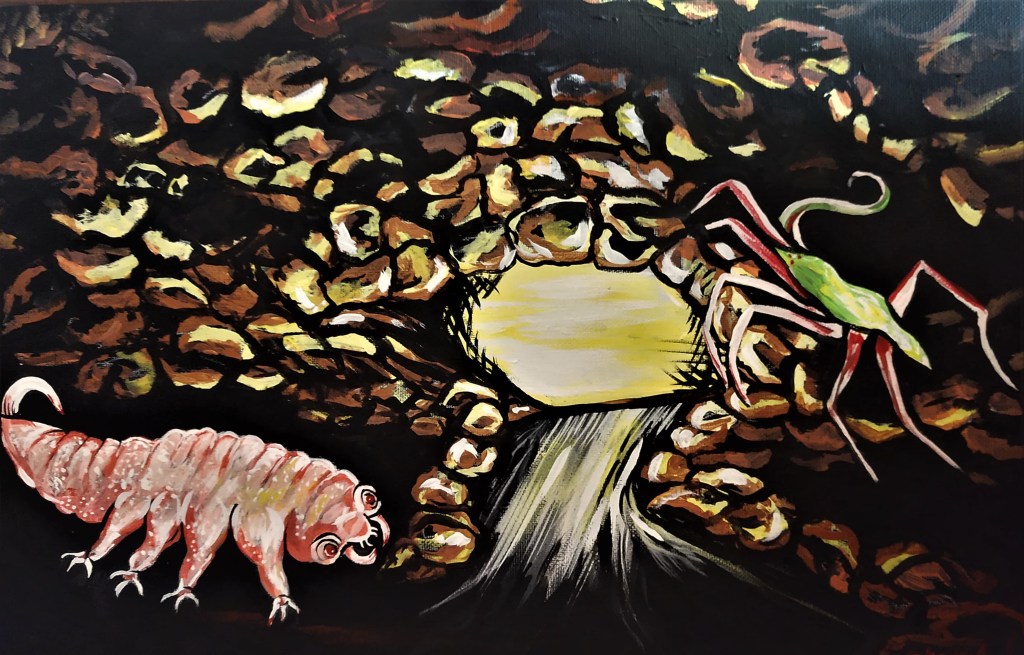
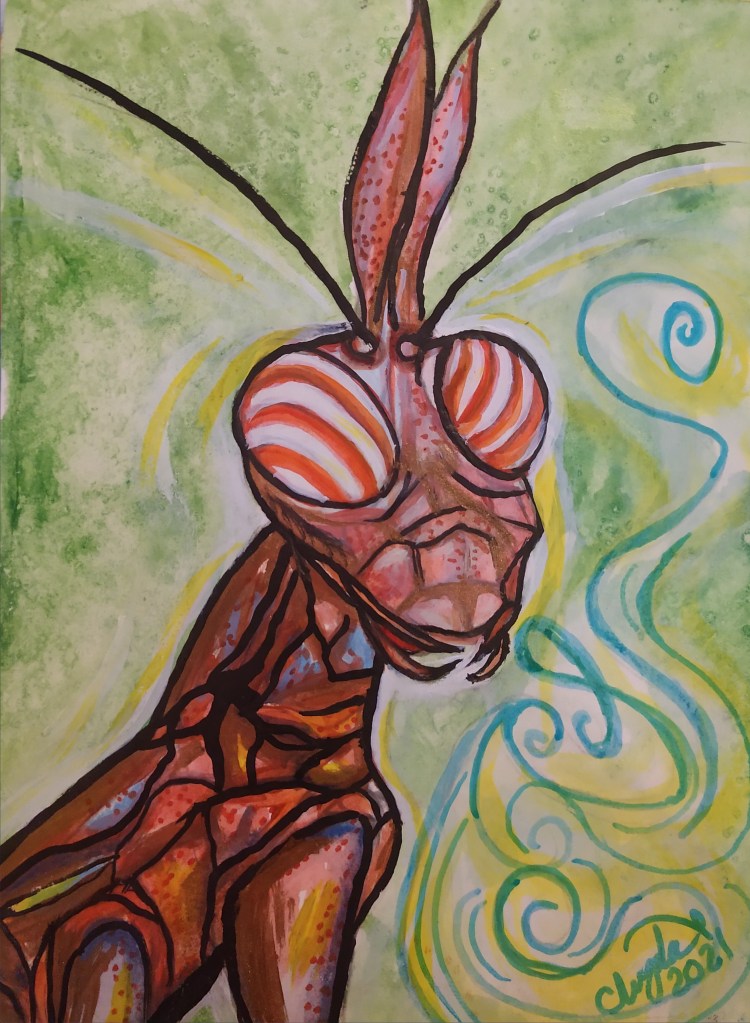
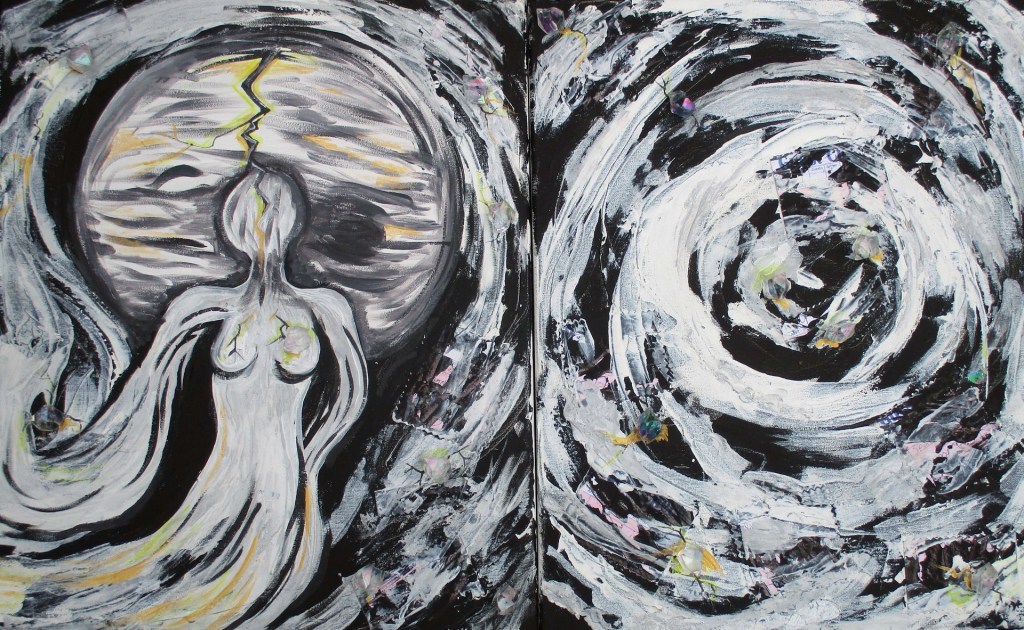
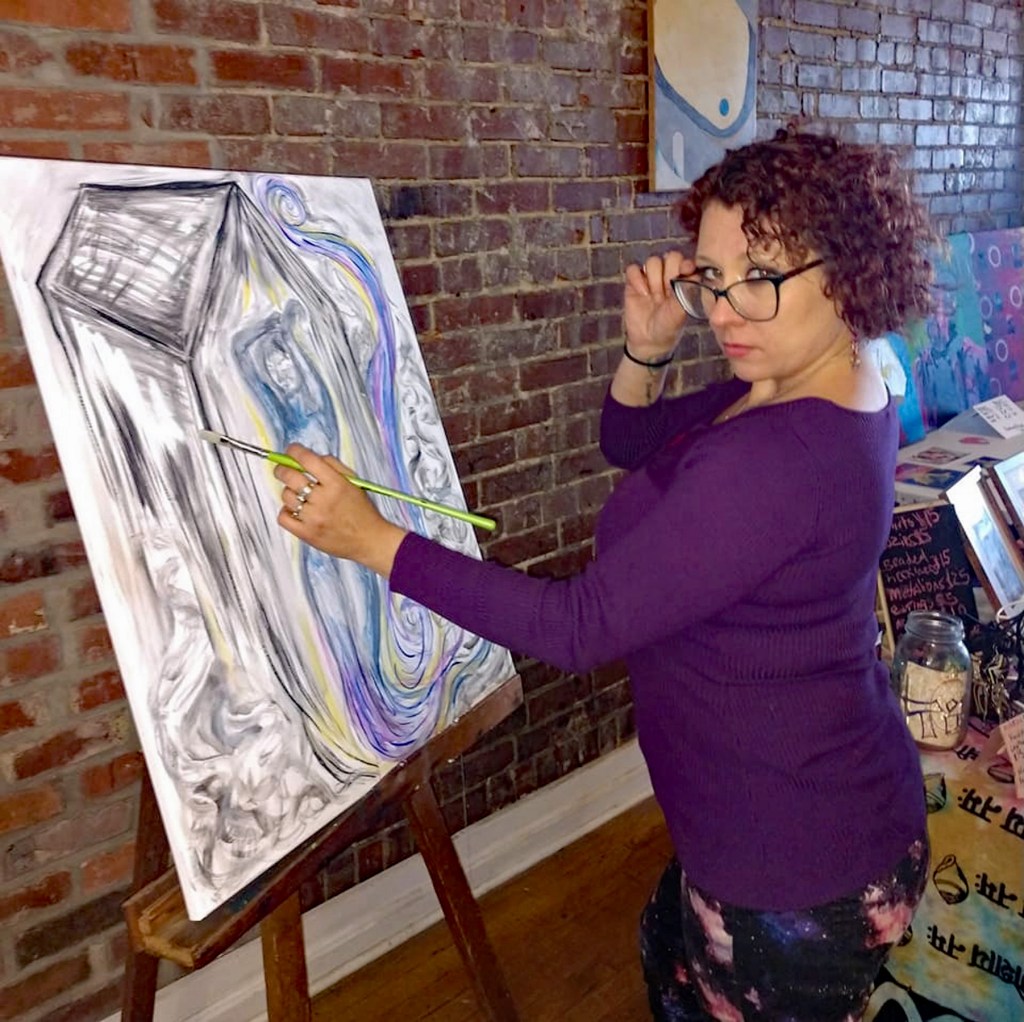
Chrystal Robinson-Shofroth is an interdisciplinary artist, who specializes in curating Multidisciplinary arts experiences that engage all of the senses. Chrystal studied Special FX at Art institute of Pittsburgh, and grant writing, Video Game design and 3D graphics at Stark State, but her passion will always be painting. Chrystal owns GhostRighterz Artists Services where she strives to provide artists with access to administration skills and arts opportunities. GhostRighterz, the ghost behind the scenes, offers the community a variety of artistic services including t-shirt and merchandise production and design, murals, event coordinating and commissioned artwork. She has a passion for the preservation and revitalization of Downtown Alliance. She was recently put on the board for The Alliance Area Preservation Society and hopes to really use this opportunity as a platform for change in Downtown Alliance. Her event The Historic Main Street Arts Festival will take place in downtown alliance on July 23 2022 2-9pm. Chrystal is the VP for FashionAlliance Project and the 2021 second place winner of the Mount Union Artfest as well as numerous awards around the country. Chrystal strives to advocate for disability rights and inclusion in the Ohio Arts Scene. GhostRighterz Artists Services has a lot of intriguing events and projects in the works for 2022. The public can expect more artistic videography and digital mixed media work in the future, the future of art evolves around Ohio and Chrystal’s artwork is evolving with our technological age.

If I were to perish tonight, let me peacefully evanesce with you wrapped inside my arms.
For when my heart dwindles, the symphony within yours shall orchestrate the heavens to prepare for lover’s depart as your notes carry me home.

“Hello everyone, I’m Steven LeRoux. I’m a husband, father to 4 beautiful boys and an STNA by night. I recently got accepted into the Fall 22′ nursing cohort, which I’m extremely excited about starting. My long-term career goal is to become a psychiatric mental health nurse practitioner. I’m a food enthusiast and do a pretty good impression of Gordan Ramsay in the kitchen (skill wise), I love the beach and being outdoors, I enjoy being active in the community and get involved in coaching youth baseball and basketball whenever I can, and of course – my love for poetry.”

Throughout the 1980s and 1990s, malls in America (while open) were lively, crowded spaces. They were the place everyone, boys and girls, old and young, went to. However, once they closed, whether temporarily or permanently, the atmosphere completely changed. Malls became eerie, almost as if the building had been abandoned, or was “dead.” This phenomenon is known as “kenopsia,” the feeling of seeing a place usually filled with people now empty. This feeling fascinated many people, so many that over the next decade, it evolved into its own subculture. Now, a simple search can lead to hundreds of videos and photographs showcasing empty malls. While interesting as a subject of visual art, the dead mall is no longer just an internet subculture. Many malls in America, over the past few years, have been shut down, resulting in them becoming “dead” permanently. This phenomenon has raised many questions regarding what is happening to America’s malls, whether they can be saved, or whether they are even worth saving.
Over the past decade, anchor stores within American malls have been declining. According to Joseph Tokosh from Kent State University, Sears, Macy’s, and JC Penny had closed from 20-25% of their stores in America as of 2018. Since then, that number has only continued to rise. According to Green Street Advisors, a research firm that deals with real estate referenced in The New York Times, “more than half of all mall-based department stores would close by the end of 2021.” There are many factors that led many anchor stores within malls in America to close their doors. One of the biggest factors was the rise of online shopping sites such as Amazon. According to Fujie Rao, from the department of architecture, mall anchor stores such as Macy’s, Sears, and JC Penny have been struggling to compete against online retail. People are now spending more time shopping at home online rather than in physical stores. This has resulted in many brick-and-mortar department stores closing down due to a lack of customers. Another big factor is consumers choosing discount department stores such as Walmart, Target, and T.J. Maxx over the anchor stores within malls. According to Sapna Maheshwari from The New York Times, T.J. Maxx made over one billion more dollars than Macy’s in 2015 and has continued to make more sales ever since. This shift in cheaper discount stores over the more expensive department stores has caused malls’ anchors to lose money.
Malls have made many changes in order to both try to keep their doors open and bring new consumers in. One prime example of this is the American Dream mall. American Dream was not just designed to be a mall; it was a mega mall. Mega malls like American Dream were not built to be just bigger in size, but also bigger in entertainment. They hold more than just the popular retail stores consumers see everywhere. American Dream, for example, has both an indoor DreamWorks-themed waterpark and an indoor Nickelodeon-themed amusement park. It also has two indoor mini golf courses, two ski rinks, an aquarium, a LEGO-themed playground, a wave pool for surfing, and even a Ferris wheel outside. In addition, it has full service restaurants, from fine dining such as Carpaccio to fast food such as Five Guys, not just a simple food court. American Dream even partners itself with local hotels within the area to make it easier for visitors to find a place to stay. American Dream, along with many other mega malls, now seems to be an indoor vacation spot for visitors rather than a shopping center for locals. In addition, many department stores within malls including Macy’s, Dillard’s, and Sears have created websites for consumers to shop online. This way, the companies have the benefits of both online and in-person retail. In addition, the websites also help advertise current deals and sales within the stores. The websites also can assist consumers in finding the nearest stores and offer awards for frequent shoppers who have memberships.
However, these changes have not been able to save malls from being closed. Despite creating their own shopping websites, department stores still struggle to compete against Amazon. According to business reporter Corey Goldman, Amazon led many department stores to have to create websites alongside their brick-and-mortar stores in the first place. Now, to make matters worse for department stores, Amazon has branched out into physical stores, making it even harder for retails to compete with the efficient shopping experience Amazon offers. In addition, according to The Simon Property Group, one of the largest mall operating companies , consumers are more likely to turn to online shopping over brick-and-mortar stores. This is due not only to convenience, but also to avoid the risk of Covid-19. The pandemic and related restrictions made malls in America lose even more money and consumers. The quarantine escalated the issues malls were already facing and made matters worse. Even American Dream mall, with all its fancy attractions, suffered financially due to these restrictions, possibly even more than the regular malls. Being so large, American Dream took seventeen years to build. Then, unfortunately, once it was complete, it opened its doors at arguably the worst possible time: 2019, just a year before Covid hit America. Mega malls, unlike regular malls, rely much more on foot traffic from vacationers in order to stay open, due to making most of their money from the big indoor parks and rides. If anything, going bigger and expanding completely backfired on mega malls during the pandemic, resulting in them closing along with the regular malls.
Some economists may argue that malls are outdated and therefore should simply be destroyed. Green Street Advisors states that malls will become “irrelevant retail destinations” due to the closing of many anchor stores. However, while it is true that many department stores within malls have declined in popularity, that does not mean the entire mall itself is no longer an important part of the community it is in. Malls provide teens with public spaces to socialize and move away from parents’ supervision. Sirpa Tani from the Department of Teacher Education of the University of Helsinki, describes malls and other similar places as “loose,” meaning the area is not always used for its primary intention. Teens enjoy places such as the mall because, while they could shop or eat, they can choose not to. It is a place where the teens can simply socialize and “hang out.” When asked about why they enjoy going to the mall over hanging out at home, one teen named Juke explained in an interview, “‘Well because you don’t feel like staying at home…because there you have rules and all….We are just for once free [here].’” Malls provide a safe escape for communities’ teens to simply be themselves without worry.
If malls are shut down and destroyed, not only will America lose important places for teens to socialize; communities will also lose large amounts of space that could be utilized. According to Patricia Kirk from WealthManagement.com, rental prices for warehouses are now higher than ever due to the lack of available space for companies. Along with that, according to Chris Arnold, a financial reporter from npr.org, “…the U.S. is more than 3 million homes short of the demand from would-be homebuyers.” Malls are large facilities that could provide more than enough space to solve these issues. Destroying them would not only be a waste of resources, but also destroy a potential solution to these problems.
Some communities in America have been able to successfully save their malls and other large buildings by converting them into facilities that provide more essential services and spaces. Providence, Rhode Island, for example, was able to successfully convert an abandoned mall. The city transformed The Arcade Providence, the first and oldest indoor mall in America, into a housing facility. According to Arcade Providence’s website, inside the building now consists of small micro apartments, restaurants, a bookstore, and two salons. The Providence apartments may be smaller and lack household items such as stoves; however, this is not much of a problem as they are directly above restaurants, and residents are allowed to bring portable electric stoves. Residents can easily walk to get a meal or a salon treatment, saving gas money and reducing air pollution. Along with that, the locals in the town of Memphis, Tennessee, were also able to successfully convert an abandoned Sears building into a multi-use development called Crosstown Concourse. The facility currently holds a highschool, art galleries, restaurants, live music events and even healthcare facilities. Both of these facilities now pride themselves as places of community and bringing people together, similar to how typical shopping malls brought many different people together.
So, is it possible for American malls to make a comeback? Perhaps they can, but it will take more than just adding new fancy attractions or websites. They must make large changes and provide what consumers are now currently demanding, which may not include large shopping centers. If more malls shift their focus from making sales to making a connection with their community, like Arcade Providence and Crosstown Concourse, they too can adapt to a changing world and provide people something that online shopping and discount stores cannot.
References
American Dream. (2021). Attractions and Tickets, Food and Drinks, Book Your Stay. https://www.americandream.com
Arcade Providence. (n.d.). Retail, History, Microlofts. https://www.arcadeprovidence.com/
Ark, T. V. (2020, March 5). Crosstown High: Innovative Memphis school in a vertical urban village. Getting Smart. https://www.gettingsmart.com/2020/03/05/crosstown-high-innovative-memphis-school-in-a-vertical-urban-village/
Arnold, C. (2022, March 29). There’s never been such a severe shortage of homes in the U.S. Here’s why. NPR. https://www.npr.org/2022/03/29/1089174630/housing-shortage-new-home-construction-supply-chain
Garfield, L. (2016, October 10). America’s oldest shopping mall has been turned into beautiful micro-apartments — take a look inside. Business Insider Nederland. Retrieved April 14, 2022, from https://www.businessinsider.nl/americas-first-shopping-mall-is-now-micro-apartments-2016-10?international=true&r=US
Goldman, C. M. (2022, January 20). Amazon forced retailers to go online. Now it’s taking over the empty space. TheStreet. https://www.thestreet.com/lifestyle/amazon-forced-retailers-to-go-online-now-its-taking-over-the-empty-space
Kirk, P. (2021, December 6). Industrial tenants renew leases far in advance, raise warehouse roofs and more to deal with space shortage. Wealth Management. https://www.wealthmanagement.com/industrial/industrial-tenants-renew-leases-far-advance-raise-warehouse-roofs-and-more-deal-space
Maheshwari, S. (2017, January 6). Department stores, once anchors at malls, become millstones. The New York Times. https://www.nytimes.com/2017/01/05/business/department-stores-macys-sears.html
Maheshwari, S. (2020, July 5). With department stores disappearing, malls could be next. The New York Times. https://www.nytimes.com/2020/07/05/business/coronavirus-malls-department-stores-bankruptcy.html
Tani, S. (2015) Loosening/tightening spaces in the geographies of hanging out. Social & Cultural Geography, 16:(2), 125-145. 10.1080/14649365.2014.952324
Thomas, L. (2019, October, 22). More than 17 years in the making, American Dream megamall’s story was shaped by retail’s upheaval. CNBC. https://www.cnbc.com/2019/10/22/timeline-of-new-jerseys-american-dream-megamall-and-how-it-got-built.html
Tokosh, J. (2018). Is the Macy’s in my mall going to close? Uncovering the factors associated with the closures of Macy’s, Sears, and J.C. Penney stores. Growth and Change, 50(1), 403–423. 10.1111/grow.12269
Rao, F. (2020). Unraveling material/digital shopping space: An assemblage approach. Geography Compass, 14(11). 10.1111/gec3.12539
Wired. (2019, June 28). Architecture professor explains why malls are dying. [Video]. YouTube. https://www.youtube.com/watch?v=sBEajQWy-LU
“I am currently majoring in Graphic Design at Stark State. I enjoy art, music, animals, nature, photography, and animation.”

As a drifter, I’m always on the lookout for a new home; whether it’s on a park bench, behind a dumpster, or in this case, a car. I’ve been watching the car from behind a building for about an hour to see if the owner would come back to their beat up Station Wagon, but so far, no one has. Just my luck! I quickly walk over to my new “home” and admire it for a few seconds, noticing the faded bumper sticker that said, “Smile, Your Mom Chose Life!” I refocus my attention back to the car, sweating and shaking nervously as I start to pick the lock, and with the scorching hot California sun beating down on me, I don’t feel any better. I finally got the door opened. The smell of old gym socks, hot garbage, and rotten eggs rolls out from the car. The carpet looks like the furry, green mold that grows on the lid of expired cottage cheese. I notice all the trash, a screwdriver, and a pile of grease stained food wrappers in the passenger seat, along with a dead rat on the floor. “Well no wonder it smells so bad.” I mumble to myself. I remove the warm plastic cover on the steering column with the screwdriver I had found and begin to hotwire the car. I hear a faint rustling sound but I ignore it, assuming it’s just another rat. Only seconds passed until I heard it again, and again, and again. I finally look up at the dusty rearview mirror, worrying that it was the owner walking back to their car but instead I see two crazed, yellow eyes staring back at me. I turned around to face the back seat and saw a man who looked dirtier than I did. He had big, dark circles under his eyes and a long, white beard with food particles in it. His gray jogging suit was dyed with an assortment of stains. He pointed a handgun at me and smiled, displaying his dull, yellow teeth that had more holes than a golf course. “Smile.” he said in a low smoker’s voice. “Your mom chose life!” I discreetly reach in my pocket for the elephant tranquilizer I had stolen from the zoo. I bring it to my lips and blow, shooting him in the arm, watching his eyes go in different directions as he loses consciousness. “Yeah, but I didn’t.”
“I am majoring in graphic design with hopes to one day become a t-shirt designer and open my own business. I love art in all of its forms, with painting and writing being my favorites. I also love punk rock, horror movies, and Jesus.”

People have become inundated with laws, systems, opinions, fake news – life in general. Most of us are searching for our purpose in life and wondering why we even exist in the first place as you think to yourself that there must be more to life than working in toxic environments, with people we tolerate daily, paying astronomical bills to companies who get away with robbing people blindly, then dying without ever exploring the world around them. But, what more could we be searching for, and why have we not encountered it yet?
In my life, I have discovered that we are all searching for some level of happiness, peace, joy, and serenity that we have yet to experience. Many of us are looking for validation from others to gain some sense of belonging or added value. Even if we did receive that validation, we are still left empty, wanting to belong to someone or something.
As a child, I recall a feeling of emptiness because my mother fell victim to the streets, and drugs and alcohol took our family in another direction, as my father was left to raise three young girls alone. Feeling lost, empty, and saddened by my parent’s divorce, I turned to a stuffed animal I called “Mr. Bear.” Mr. Bear became my voice of reasoning even though he would never respond nor give me the guidance that I needed. Yet, he was all I knew.
During various stages of my life, I would encounter people who would begin to share the mysteries of Jesus Christ with me. If my memory serves me correctly, I was eleven when my next-door neighbor started depositing positive affirmations about God’s love for me. I would go on to have several encounters like those throughout my adolescence. It was like God would strategically use people to share about his Son Jesus in hopes that I would one day believe and receive his love and grace. Finally, at the age of seventeen, I did receive my salvation and accepted Christ into my life as my Lord and Savior.
The years progressed, and God’s power was more evident than ever before in my life. I wanted other people to experience this same joy that I had found in Christ. However, I was often met with rejection when attempting to share my newfound faith, as I asked people if they were Christians or had they received Christ in their lives. I remember the looks of frustration and disgust as an old friend’s eyes rolled to the back of his head because I wanted him to understand this newfound faith. If that wasn’t enough, I recall an argument with a relative who implied I thought I was better than everyone else. All the hurt I felt. Surrounded by rebuttals, my new faith caused me to wonder why people repudiate Christianity or negate Christ’s existence?
With Christ offering salvation to the masses, people are prone to repudiate Christianity due to the conflict of their fear or misunderstanding of the spiritual versus rational and scientific thought. But, hypothetically speaking, could the answer to why people repudiate Christianity indeed be found in textbooks? In reality, probably not because we have been inundated by research and data that suggest there is no God, therefore concluding that Jesus Christ must be a myth. For example, according to Matt Williams in the article “What is the Big Bang Theory?” on phys.org (2015), astronomers have long declared that the universe began due to the Big Bang Theory. This theory would mean that our existence started over 13.8 billion years ago as a small ball with infinite density and intense heat called a singularity (single point) that inflated and stretched – first at unimaginable speeds and then at a more measurable rate.
The Big Bang Theory brought to the forefront of our minds how the universe was created; then came the idea of the evolution of humanity, which says that the first humans emerged in Africa around two million years ago, long before the modern humans known as Homo sapiens appeared on the same continent. Becky Little, author of the article How Did Humans Evolve on History.com (2021), expounds on one of the earliest known humans were Homo habilis, or “handyman,” who lived about 1.4 million to 2.4 million years ago in Eastern and Southern Africa. Others include Homo rudolfensis, who lived in Eastern Africa about 1.9 million to 1.8 million years ago (its name comes from its discovery in East Rudolph, Kenya); and Homo erectus, the “upright man” who ranged from Southern Africa all the way to modern-day China and Indonesia from about 1.89 million to 110,000 years ago.
In addition to these early humans, researchers have found evidence of an unknown “super archaic” group that separated from other humans in Africa around two million years ago. These super archaic humans mated with the ancestors of Neanderthals and Denisovans, according to A. Rogers, N. Harris, and A. Achenbach in the Science Advances February 2020 article. This marks the earliest known instance of human groups mating with each other—something we know happened later.
Evolution says that humanity started with ape-like beings; Christians would argue that Adam and Eve were the first humans to be created by God. While science believes in the Big Bang Theory and evolution, Christians today believe in a God who formed everything, then shortly after, sent his son Jesus Christ to die for us so that we might have an abundant life. If we live in a world that declares we can manifest anything we want, this insinuates that our words have the power to manifest something so great. If this is true, why couldn’t God’s command, “Let there be light” (Genesis 1:3), be the same as the Big Bang Theory? This manifestation means that it could be possible that there is a God who commanded it all.
I have found that people are quick to dismiss what they do not understand or have not experienced. Maybe people repudiate Christianity because of the mystery of accepting what the naked eye cannot see. Yet, we can receive the oxygen we breathe, though invisible to the human eye. We also acknowledge that George Washington was the first recognized president in the United States in 1789, over 240 years ago, but none of us were born in that era to know if this was fact or fiction. We can only assume that the information about the president is accurate based on what was told.
Maybe my rational thinking is wrong. Could it be possible that people do believe that God exists but do not accept Christianity because of a horrific experience they encountered with the church? An online article in The Guardian, written by Harriet Sherwood (2018), spoke of Europe’s march toward a post-Christian society shows that most young people in a dozen countries do not follow a religion, and 70% of young people in the UK identify with no religion.
These figures were published in a report called Europe’s Young Adults and Religion by Stephen Bullivant, a professor of theology and the sociology of religion at Mary’s University in London, which was based on data from the European social survey 2014-16. Religion was “moribund,” he said. “With some notable exceptions, young adults increasingly are not identifying with or practicing religion.” Moreover, the trajectory was likely to become more marked. “Christianity as a default, as a norm, is gone, probably gone for good – or at least for the next 100 years,” Bullivant said.
After reading the article, a nerve in my brain cells sparked a greater level of curiosity, which led me on a journey to see what others had to say about this topic. To my surprise, I discovered many discussions online about the decline in the Christian faith.
To expound upon the concept of why people repudiate Christianity, I turned to the TedTalk titled The Gospel of Doubt, where author Casey Gerald shared how he lost faith in Christianity because on December 13, 1999, at the age of 12, he found himself confused; after the church told him that Jesus was coming back as a result of Y2K. He then shares how in the face of uncertainty and depression, he began searching for things to make him happy and searching for his purpose. Since Gerald had lost hope in Christianity, doubt formed, and he began to entertain ‘false gods’ like money, time, and success. Ultimately, Gerald said he became a ‘fake savior’ trying to save the world. In the closing of his speech, he says that he learned that it is okay to have a gospel of doubt, and there must be another way.
While I can understand Gerald’s frustrations, as I intensely watched him deliver a very heartfelt message, I could see a man whose demeanor reflects a feeling of hurt and disappointment, searching for answers in a world that do not always have the answers to give. At this very moment, every speculation I had about why a person might withdraw themself from the gospel of Christ became evident. In this case, what became apparent was that the church was more focused on the return of Christ instead of the love of Christ, which is why Gerald assumed that the church knew when Christ would return. Yet no man has knowledge of the day or the hour of his return according to the scriptures in Mark 13:32.
As I ponder on the generation that rejects Christianity, I am at a loss for words because I believe that the church has somehow failed to represent Christ. If people only knew the God that I know through Christ, they would understand that we were once under the law of Moses by the authority of ten commandments that stated everything that we were doing wrong and should not do to offend God. Commandments like, “Thou shall have no other gods before me,” “Thou shall not kill, commit adultery, not steal, bear false witness against thy neighbour,” etc. (Exodus 20:2-17)
However, once God sent Jesus as a sacrifice for our sins, it then became the law of grace that governed us. The word of God clearly states, “For by grace are ye saved through faith; and that not of yourselves” (Ephesians 2:8-9). Then, in Romans 8:1, the Bible declares, “There is therefore now no condemnation to them which are in Christ Jesus, who walk not after the flesh, but after the Spirit. To paraphrase, God was saying that through Christ, there is no condemnation because God used Christ to become sinful flesh on our behalf so that he would be condemned for the sins that would have killed us in the old covenant. Therefore, I believe that if the church led with love and grace instead of condemnation, more people would be drawn to Christianity instead of repudiating it.
Christ is the best example of leading by love and grace, as he frequently sat amongst sinners, asked them questions about their life, or their shortcomings, without judgment or condemnation, but with love, he would draw them closer. Ultimately the love and grace shown to sinners through Christ’s agape love would soon cause them to turn away from the very sins they indulged.
The beauty of Christianity is not the idea of a gospel (or religion) being forced on anyone but rather the opportunity to choose a God who exudes an agape love that no other being on earth can fulfill. God desires that we would all come to accept the salvation of the Lord Jesus Christ. Still, until the church can learn to walk in the love that God intended for us and extend the same grace that Christ gives, there will be a nation searching to fill a void of peace, happiness, joy, and love that no carnal-minded person can provide.
Many believe that the universe formed from a big bang theory or human beings evolved from an ape-like creature; it can be brutal to convince someone to follow a spiritual God who cannot be seen. 1 Corinthians 2:14 best defines why it will be impossible for some people to ever come to the realization of Christ; “But the natural man receiveth not the things of the Spirit of God: for they are foolishness unto him: neither can he know them, because they are spiritually discerned.” Based on this scripture, it is safe to say that the church alone could never convince anyone to accept Christianity or draw closer to Christ if that person does not first believe that we are all spiritual in some fashion.
As long as we continue to view Christianity as science does or rebuke others instead of leading with love and grace as Christ did, we will be content in our carnal-minded thoughts; never seeking after the spiritual relationship that is needed to understand Christ fully; and continuing to be a generation who repudiates Christianity, unlike our forefathers who dared to believe in a God that is much greater than we could ever imagine or think.

“LaKisha Nevels is your everyday woman wearing many hats and transforming lives in the process. She is a licensed insurance agent and legacy strategist who aims to help families create or restore their legacy. Typically, you can find her helping individuals who feel stuck and unable to go beyond the negative thoughts that keep them from creating a life full of abundance.
Her mission in this present day is to inspire individuals to take control of their life by learning how to SOAR! (Successfully Overcome All Roadblocks). She helps people shift their mindset, which ultimately changes their negative thinking, and creates a happier fulfilled life. She is a single mommy of two girls, contributing author of the Amazon best-selling book The Queens’ Legacy, and current host of a Christian podcast called We Are the Remnant.
She has been featured in various media outlets, such as My Life Magazine, The Toilet Paper Entrepreneur, PR Underground, and Kevin M. Kermes E-book 70+ Tips to Perfect the Interview.”


Rebecca Lutz is currently going to school for teaching and psychology. She is a mom of two children, and loves being outdoors and reading. She also loves taking pictures of all things.




Meredith Johnson is a single mom to two beautiful girls, going to school for Surgical Technology, and in the fight of her life with Ovarian cancer. She loves her family, boyfriend, friends, all her fur babies, coloring her hair and tattoos. Her favorite place to visit is Colorado. Her hobbies include painting, ceramics and collecting plants. When she’s painting, she loves to use a lot of color and think with her love for plants; it just came natural to her to paint flowers. Her favorite quote is “the best view comes after the hardest climb” because after everything she’s been through with the cancer, she has a better look on life and to her, it’s the best view!
Who comes to a park during a snowstorm? I thought. The snow has reduced visibility to practically nothing; I mostly just see a wall of gray and white. As I walk through the entrance to the Nature Realm Metro Park, the snow eases up a bit and I can begin to make out some of the scenery. Admittedly, the Nature Realm does look pretty while covered in snow, but it resembles more of a blank canvas than the colorful work of art it looks like during nicer weather. Akron, Ohio has a quite a few picturesque, serene parks for its citizens to enjoy but the Nature Realm specifically has a deeper significance to me. My mom used to bring me to this park when I was a child and I have felt a strong personal connection to it ever since. It is that park, the one from my childhood where it is springtime and the flowers and trees are in bloom, which lives in my memories. All of the experiences I’ve had here make this more than just a park, more than just a dot on a map. The connection I feel to this place takes root in all of the color, all of the activity, all of the life that normally happens here. Today, however, no flurry of activity remains, only flurries of snow. The park seems almost unrecognizable; the blizzard has partially hidden the familiar landmarks. Will I even be able to make any significant observations or should just leave and come back on a day with better weather? I decide to endure the harsh weather and see what, if anything, I can discover.
In the spring and summer, the Seiberling Nature Realm is a beautiful sight to behold, with flowers and trees in bloom in every shade you can imagine, animals scurrying over the carefully manicured landscape, and dozens of people- couples, families, and friends- enjoying each other’s company in nature. Autumn extends its own brilliant offerings; with over 300 different kinds of bushes and trees that grow there, the landscape blazes with gorgeous shades of red, orange, and gold. The visitors give off a different kind of energy than in the warmer months, getting in their last hikes before the weather turns, in a state of constant movement in an attempt to stay warm. The park wildlife frantically seeks out food to store in preparation for the winter ahead. All of the movement and dazzling color create a palpable sensation of excitement and life.
This is the first time I have ever seen the Nature Realm in this condition. I’ve visited in winter before, but only ever on one of those freak 70-degree days in January that we occasionally get in Akron. I’ve never felt the need to go on a hike during a blizzard. Cold, wet clothes offend my senses. Today, though, since I am forcing myself to experience it, I can begin to see the value in taking a snowy hike. The whole park is covered in a blanket of sparkling white. The crisp air feels invigorating. I take a deep breath and feel a chill permeate through my nose, throat, and lungs. I breathe out and see my breath crystalize in a glittering cloud that quickly dissipates. As I cross a little bridge near the entrance of the park, I look down and see a few faint footprints in the snow that are rapidly being filled in with fresh flakes. I peer over the bridge and down to the creek below. I once saw a muskrat dive into the murky water there but today there are no animals, just slush and ice that has frozen the tall, tan reeds into a snow-dusted still life.
I look out toward the trees at the end of the clearing and see patches of brown bark and deep green pine needles peeking out from under the sheet of white like little kids impatiently waiting during a game of hide and seek. I have only passed one other person on the trail brave (or foolish) enough to come out in this weather. The lack of people makes for a nice change of pace. I walk into a wooded area where the canopy of tree branches has prevented some of the snow from reaching the earth. The ground here is mostly covered in dead leaves, the many different shades of yellow, gold, and brown give my eyes a break from the relentless white behind me. A few of the trees have fallen to the ground. They resemble dead giants, the casualties of war against Mother Nature. But Nature takes some compassion and covers the bodies with blankets made of moss and snow.
I do not see or hear any of the animals that I normally witness. Are they hiding out somewhere safe and warm until the storm passes, the same way that I had wanted to? I can’t hear much of anything at all besides my feet crunching in the earth below me; the snow absorbs all of the sound. The quiet is actually really pleasant. I am free to be alone with my thoughts and feelings. I let my mind wander and I start to think about when I would come here as a small child.
I know that I used to visit this place with my mom, I just don’t remember any specifics. She loved nature in a way that I was unable to appreciate at such a young age. I was more preoccupied with toys, boys, and drama at school. My dad tells me that she would point out the different kinds of trees, herbs, and birds, trying to instill in me a respect for nature similar to the one she had. He says my mom and I would visit here often until she got too sick to find the energy.
The memories I have from before my mom died are very vague. Before I lost her, I didn’t realize that people needed to be committed to memory. I couldn’t comprehend that lives, especially parents’ lives, especially my mom’s, were temporary. Before the age of nine, having Mom around was just a given. Even when she was terribly sick and had wasted away to a shadow of her former self, it still never registered that there was a chance I could lose her. The memories I have from when she was still alive are very foggy; however, I have very specific recollections of the day that she died. I remember my dad and brothers coming into my room to let me know that she had passed away. We sat on my bed, huddled together and crying. I remember later that night, my younger brother and I lying on our backs in our grandmother’s bed, reaching up into the darkness and calling out for Mom to come back, trying in vain to ignore the sounds of the rest of our family sobbing in another room. The memories after she passed are devastatingly clear; the memories before, maddeningly hazy. I wish I could remember her better but trying to recall some kind of distinct memory feels as frustrating and fruitless as reaching out for her in the dark on the night that she died.
Not having specific memories of my mom has been difficult but coming to the Nature Realm has always made me feel connected to her. I would come here as teenager to hang out with my friends. As a young adult, the Nature Realm became one of my favorite places to take dates. No matter the circumstance in which I visited, I always felt like my mom was looking down on me, hopefully proud of the person I had become. I had finally started to appreciate nature the way that she had hoped I would.
Now that I am a mother myself, I like to come here with my son. I point out all of the different trees, using the shapes of the leaves and the textures of the bark to identify them. We fill our lungs with the beautifully fragrant air in the herb garden. We stand as still and as quietly as statues, our arms outstretched with piles of seeds in our palms, hoping a chickadee will land on our fingers to grab a bite. My son will never get the opportunity to meet his grandmother but at least I can bring him to a place where I feel her presence, and I can continue her dream of passing on a gratitude for the outdoors to the next generation.
I take the winding path out of the woods and into another clearing. On either side of the path stand two weeping evergreen trees, their bowing made even more evident by the heavy layer of snow. They look like two ancient guards, hunched over with age and exhausted from a long day of defending against an unrelenting enemy. I continue walking and the near-empty parking lot comes into view. A spot of bright red on the ground catches my eye. I look closer and see a few holly berries from a tree that’s several yards away, evidence that an animal was here even if I didn’t see or hear it. I walk to my car and while I’m relieved to finally get out of the cold, I feel grateful for the ability to experience this place in a new light.
I came here during a blizzard and at first I couldn’t look past all the snow. A park usually filled with color, animals, and people was quiet, still, and white. Even though it was the same place I had visited for years, it didn’t feel the same. The landscape was familiar yet changed. My first reaction was to leave and wait for a day with better weather to return. I felt as though making meaningful observations during a snowstorm was hopeless. Instead of going with my first instinct though, I decided to stay and I ended up discovering a new facet of my relationship with the Nature Realm that I didn’t realize was possible. Even though most people would not think to go on a hike during a blizzard, it’s like Robert Frost wrote: “two roads diverged in a wood, and I – I took the one less traveled by, and that made all the difference.” When I learned to appreciate the beauty in the quiet, soft stillness, I no longer saw the snow as an obstacle. The cover of white, which shrouded the familiar scenery and created a sort of blank canvas, allowed me to focus on my thoughts and memories rather than the landscape; it allowed me to heal. Instead of leaving when the path ahead looked difficult, I persevered and I made it through. Now I have one more positive memory to attribute to this place, which holds so much more meaning than just a park, so much more significance than just its location on a map.

Tracy Murphy is a member of the Phi Theta Kappa Honor Society and is currently in her last year at Stark State. She is expecting to graduate in January 2023 with a degree in Business Management. After graduation, she plans to transfer her credits to a four-year university to pursue a B.S. in Human Resources Management on her way to becoming a Compensation & Benefits Specialist. Tracy lives in Akron with her husband, son, and two cats.

 Stark Voices
Leave a comment