
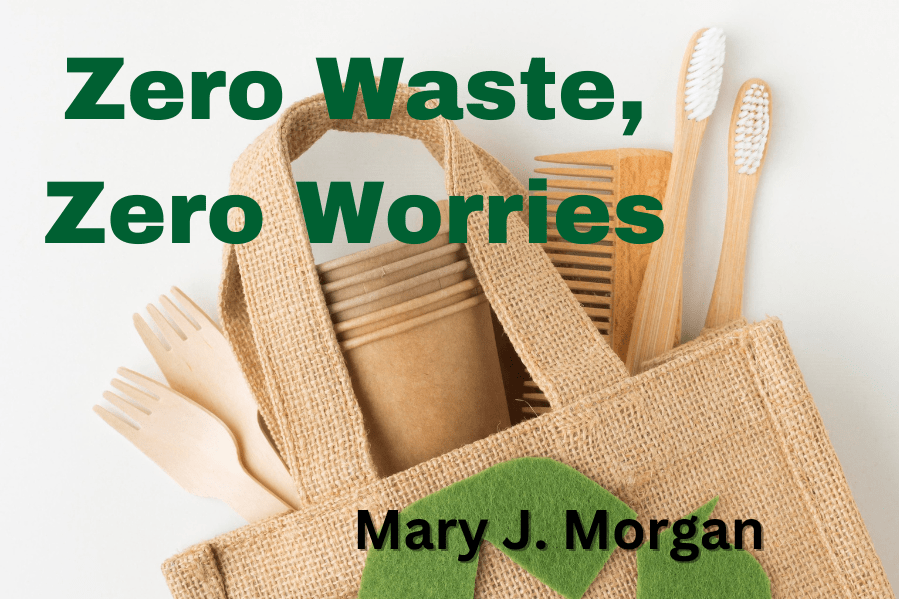
Image designed by Freepik
by Mary J. Morgan
Waste. It is something that is heavily incorporated into our everyday lives, our daily routines being plagued with single-use plastic and disposable items. Wastefulness has become so normalized in our society that many of us do not think twice before throwing something away. The amount of waste the average person generates is exponential; according to Leahy (as cited in Klug & Niemand): “A single consumer in the U.S. creates 4.4 pounds of plastic waste every day.” Our wasteful nature is not expected to change anytime soon. Hoornwerg et al. (as cited in Klug & Niemand) state that, “Food waste, broken items, and packaging are expected to double from approximately 3.5 million tons in 2010 to more than 6 million tons by 2025,” shedding light on our bleak future if we do not make changes in our everyday living. Many of us have forgotten how to live without generating so much waste, but many individuals are taking matters into their own hands to decrease everyday waste. A proposed solution to our current wasteful lifestyles is zero-waste living. Zero waste is a social movement and lifestyle created to address how consumer habits and our mindsets play a role in environmental issues. A zero-waste lifestyle helps prevent future damage to the environment and reverses the current effects of climate change, while also economically benefiting those who pursue it.
Zero Waste International Alliance defines zero waste as “the conservation of all resources by means of responsible production, consumption, reuse, and recovery of all products, packaging, and materials, without burning them, and without discharges to land, water, or air that threaten the environment or human health,” outlining the many aspects of the movement. The lifestyle heavily emphasizes consumer choices, and the overall goal is to generate as little waste as humanly possible. Environmental concerns have increased in recent years, as research has found “consumers are becoming increasingly aware of the consequences of consumption not based on choices with a positive attitude towards the environment,” showing how zero waste has gained traction in the mainstream. Major aspects of the zero waste lifestyle include only purchasing what is necessary, avoiding the use of disposables, composting organic matter, shopping secondhand, pursuing locally-made goods and buying bulk groceries.
Zero waste is about more than garbage; it also applies to saving energy and reducing methane emissions, helping prevent future damage to the environment. Going zero waste saves energy by encouraging “slow living” methods such as drying laundry on a clothesline instead of using a machine dryer. Methods such as this conserve electricity and save energy, allowing us to have a smaller carbon footprint and a positive impact on the planet. Eco-Cycle states: “Landfills are the third largest source of methane emissions in the US” and “In 2017, they emitted 107 million metric tons of CO2 equivalent (MMTCO2e) as measured in terms of climate warming potential over 100 years.” A zero-waste lifestyle emphasizes the usage of reusable products and avoiding the usage of disposables, aiming to prevent items from being discarded and sent to the landfill. By reducing contributions to landfill growth, this lifestyle reduces the amount of methane emissions in our atmosphere, helping prevent the future effects of climate change.
A zero-waste lifestyle can also reverse current damage to the environment by pulling carbon from the atmosphere. This is done through composting, one of the most notable aspects of this lifestyle. Household composting is done by collecting fruit and vegetable scraps and natural items such as paper in a bin and allowing them to naturally decompose, and it is common for zero-waste individuals to have a large backyard compost pile or to keep a small compost bin under the kitchen sink. When organic matter such as food is thrown away and buried in a landfill, it lacks the desirable conditions to break down properly, but composting provides the opportunity to return nutrients to soils. Composting pulls carbon from the atmosphere; Eco-Cycle found that, “Applying compost to 25% of California’s grasslands would sequester 21 million tons of carbon from the atmosphere—equivalent to taking nearly 4.5 million cars off the road each year.” The great impact this simple act can have on our environment partially explains composting’s popularity. However, it is not the only driving factor.
There are many benefits to pursuing a zero-waste lifestyle, and one of the most common motivators is the financial benefit. A zero-waste lifestyle saves money by encouraging the usage of reusable products and shopping secondhand. Using reusable products as opposed to disposables can save individuals a large amount of money throughout their lifetime. For example, a popular zero-waste swap for disposables is opting to use silicone food storage bags over plastic zipper storage bags. While purchasing a set of reusable bags is much more expensive than a box of disposable bags, they can be washed and reused instead of thrown away after each use. This saves individuals money as they do not have the monthly cost of purchasing wasteful disposables anymore, and the silicone bags will pay for themselves when reused over time. A zero-waste lifestyle also saves money by encouraging shopping secondhand, as Spiteri notes in a study conducted on online zero-waste communities: “Members experienced financial savings, both from avoiding making unnecessary purchases as well as from ‘thrifting’—that is, buying previously used, or second-hand products.” Buying items secondhand instead of brand new can save individuals thousands of dollars. For example, clothing from thrift stores, online marketplaces, and yard sales is priced lower than clothing from retail stores. Opting for pre-owned clothing saves individuals money, and it helps the environment as it gives unwanted items a second life and prevents them from being discarded and sent to a landfill. Zero waste is also more economical on a larger scale, with Connett highlighting the benefit to communities as a whole: “[zero waste] is far cheaper than incineration, and cheaper than state of the art landfills.”
Choosing to pursue a zero-waste lifestyle has many benefits, but there are a few negatives, including potential sexism, accessibility issues, and increased stress. The zero waste movement has been speculated to be sexist due to its ties to housekeeping, as de Wilde and Parry note “the routines of cooking, cleaning, and grocery shopping” are large aspects of keeping a zero waste household and align with traditional female gender roles. This can create more pressure for women, as they feel they are responsible for a majority of the housekeeping, and adding zero-waste habits on top of this can be overwhelming. Another common critique of the zero waste movement is limited accessibility. Special zero-waste products, such as bamboo toothbrushes and cloth menstrual pads, can be difficult to find in stores, and some items are only available for purchase online. This limits the accessibility of these products and can make them more difficult to obtain. This causes more effort on the consumers’ part, as it is easier to purchase wasteful products that are commonly sold in stores. It is convenient if an individual can locate a zero waste shop in their area, but unfortunately, these specialty stores are rare and only a handful may exist in an individual’s home state. Another drawback to a zero-waste lifestyle is stress. When an individual chooses to pursue a zero-waste lifestyle, they will typically spend some time learning about climate issues. Learning about the magnitude of the climate crisis and staying informed on current environmental news can cause an overwhelming amount of stress. This stress may cause “eco-anxiety.” A zero-waste lifestyle also encourages educated planning and making thoughtful purchases as opposed to impulse buying. This increase in mental energy can be tiring, as we are used to making thoughtless purchases without consideration of the environmental impact.
While these arguments are valid, it can be said that if everyone makes small zero waste changes to their lifestyle and increases the number of changes over time, it would have significant collective environmental benefit. Making changes in increments rather than all at once would mitigate the overwhelm and stress associated with going zero waste, making the lifestyle more realistic and feasible. Everyone can and must try their best to help the environment, as The David Suzuki Foundation emphasizes: “To achieve zero waste, we must do our best within our personal limits and our life context, while letting go of what is not possible for us,” assuring consumers that we should not be too hard on ourselves for sacrifices we cannot make. Instead of the transition being a full commitment, it would most benefit the planet and individuals’ finances if more people took the initiative to make the small changes they can implement. This would also help normalize zero-waste habits, inspiring others to make changes in their lives.
A zero-waste lifestyle helps to shape a more sustainable future. This lifestyle helps prevent damage to the environment in that it reduces methane emissions by preventing items from being sent to landfills. Additionally, going zero waste helps repair environmental damage by pulling carbon from the atmosphere through composting kitchen scraps. However, the biggest motivator in going zero waste is the financial benefits, as using reusable products saves money over time. There are criticisms of the zero waste movement, but these can be resolved through making small changes and maintaining a positive attitude toward the lifestyle. If we do not make appropriate changes to our lifestyles, landfills will only continue to grow and create more pollution of our planet and atmosphere. A single person cannot single-handedly save the environment, but if everyone works together, we can make a difference in reversing the effects of climate change. We cannot do everything in the world, but the world needs everything we can do.
References
Bogusz, M., Matysik-Pejas, R., Krasnodębski, A., & Dziekański, P. (2023, September 10). nable consumption of households according to the zero waste concept. Energies, 16(18), Article 6516. https://doi.org/10.3390/en16186516
Connett, P. (2007). Zero waste: A key move towards a sustainable society. Researchgate. www.researchgate.net/profile/Paul-Connett-3/publication/228871831_Zero_Waste_A_Key_Move_towards_a_Sustainable_Society/links/568cf33408aeb488ea31ddb0/Zero-Waste-A-Key-Move-towards-a-Sustainable-Society.pdf?origin=publication_detail
David Suzuki Foundation. (n.d.). How to go zero waste. https://davidsuzuki.org/living-green/how-to-go-zero-waste/
de Wilde, M. & Parry, S. (2022). Feminised concern or feminist care? Reclaiming gender normativities in zero waste living. Sociological Review, 70(3), 526–546. https://doi.org/10.1177/00380261221080110
Eco-Cycle. (n.d.). Zero waste is a climate change solution. https://ecocycle.org/learn-about-zero-waste/zw-is-a-climate-change-solution/#:~:text=Zero%20Waste%20Saves%20Energy&text=Using%20recyclables%20such%20as%20old
Klug, K. & Niemand, T. (2021, May 15). The lifestyle of sustainability: Testing a behavioral measure of precycling. Journal of Cleaner Production, 297, Article 126699. https://doi.org/10.1016/j.jclepro.2021.126699
Spiteri, L. (2021). Zero-waste Instagram communities: A thematic analysis of ZW activities through the lens of the lifestyle movement framework. Canadian Journal of Information & Library Sciences, 43(3), 245–268.

Mary Morgan is an Education major at Stark State. She is a part-time student and works part-time as a preschool teacher. Mary is also an artist and enjoys drawing in her spare time. She is very passionate about the environment and started her zero waste journey in 2020. Mary wrote this essay in hopes of spreading awareness about zero waste living.
 Stark Voices
This was such an inspiring read on how the zero-waste lifestyle can be a practical solution to the climate crisis! I really appreciated the optimistic tone — it’s refreshing to see a focus on what we can do, rather than just the overwhelming challenges we face. The connection between reducing waste and reducing our overall carbon footprint was especially eye-opening.
I’m curious, do you have any tips for maintaining a zero-waste mindset when faced with busy, stressful days? It can be challenging to stay consistent, so any advice would be greatly appreciated. Thanks for sharing such a positive and motivating perspective!
LikeLike
Hello, thank you for the wonderful comment. Something that helps me maintain a zero-waste mindset when busy is being prepared. I like to carry zero waste essentials in my purse, such as a reusable bag or travel cutlery, so they are always there when I need them. It is also important to be forgiving and acknowledge how far one has come on their zero waste journey to avoid burnout. The book 101 Ways to Go Zero Waste by Kathryn Kellogg is a good place to start.
LikeLike